Sellers listing a flood-irrigated lot in Arcadia almost always brace for the wrong conversation. They rehearse how to explain the water rights, worry that a buyer's lender will balk at "non-potable canal delivery," and assume the disclosure paperwork will be the sticking point. Then the actual friction shows up somewhere else entirely: a deed restriction nobody remembered existed, or a school boundary that quietly flips two doors down from the property line.
That gap between what sellers prepare for and what actually causes delays is worth understanding before you list, because the fixes are cheap and the surprises are not.
The Water Isn't the Problem
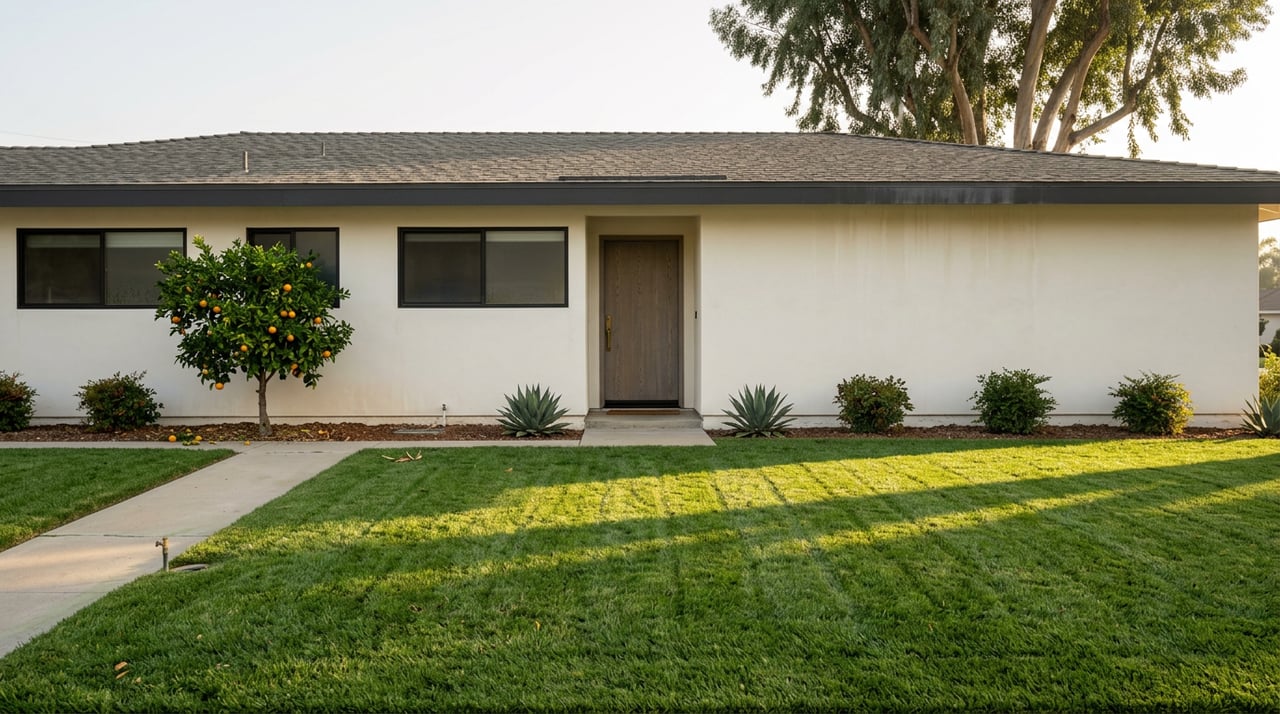
Flood irrigation is the reason Arcadia looks the way it does. Water arrives from Salt River Project canals through a turnout or headgate at the edge of the lot, then spreads across the yard by gravity through shallow channels or buried pipe. It is not treated to drinking standards and it is not meant to be. It is what keeps the eucalyptus, sycamore, and citrus canopy alive on quarter-acre and half-acre parcels in a city otherwise landscaped in gravel and drought-tolerant desert plantings.
This system is old, well understood, and inexpensive to maintain relative to the value it protects. Owners pay a modest annual fee tied to their water rights and receive water on a rotating schedule managed by the canal system rather than by the homeowner. None of that is a red flag to a buyer who has done five minutes of homework on the neighborhood. It is the reason they are looking at Arcadia instead of a subdivision two miles east.
The mistake sellers make is treating the irrigation system as the risky, complicated part of the transaction. It isn't. It is a known quantity with a paper trail. The complications live elsewhere.
What Arizona Actually Requires You to Disclose
According to Flood Insurance Guru, Arizona operates as what the industry calls a buyer beware state. There is no statewide requirement to disclose flood risk to a buyer, and the same applies to most physical characteristics of a property that fall outside a specific list of state-mandated items. What the Arizona Department of Real Estate does require sellers to think about includes whether a property sits in a Special Flood Hazard Area, whether flood insurance is warranted, and whether any known material defects exist that a reasonable buyer would want to know about before signing.
That last part is where irrigation lives. Once you know something material about how the system operates on your specific lot, silence about it can look like nondisclosure if a dispute ever surfaces. The fix is not complicated. Hand the buyer what you actually have: which SRP turnout serves the lot, the account details tied to it, a maintenance log if you kept one, and records of any changes to the system. None of this requires a specialist. It requires you to have kept the paperwork.
Here is what that handoff should look like in practice:
| What to hand the buyer | Why it matters |
|---|---|
| Turnout location and account details | Confirms which SRP delivery point serves the lot and who is billed |
| Typical delivery schedule | Sets expectations for how often water arrives and how long it takes to soak in |
| Maintenance records | Shows the gate, valve, or pump has been kept functional, not neglected |
| Notes on drainage paths | Helps the buyer understand where excess water exits the lot |
A buyer's agent who has worked in Arcadia before will ask for most of this anyway. Having it ready before the question comes up is the difference between a smooth escrow and a week lost to chasing down a decades-old permit.
The No-HOA Neighborhood That Still Has Rules
Arcadia markets itself, accurately, as a place with little to no HOA presence. Most subdivisions here were platted before HOAs were standard practice, and buyers coming from a managed community elsewhere in the Valley often treat "no HOA" as shorthand for "no restrictions." That assumption is where deals slow down.
Much of Arcadia operates under deed restrictions instead. These restrictions carry no monthly fee. They also do not go away because there is no HOA newsletter reminding anyone they exist. If a buyer is purchasing with a teardown, an addition, or a lot split in mind, it is worth checking the recorded language for that specific parcel.
This is worth surfacing before a buyer gets emotionally attached to a development plan. A seller who pulls the actual deed language ahead of listing, rather than relying on neighborhood reputation, removes a source of late-stage renegotiation that has nothing to do with the house itself.
A School Boundary That Moves Mid-Block
The second friction point is narrower but just as easy to miss. School assignment in Arcadia splits along an informal line near 56th Street, with addresses to the east typically zoned into Scottsdale Unified and addresses to the west zoned into Madison Elementary or Phoenix Union feeders. Two homes on the same block, priced similarly and finished similarly, can carry different school assignments depending on which side of that line they fall.
Buyers relocating from out of state, or those comparing Arcadia to nearby Scottsdale neighborhoods, often assume proximity to a well-known school like Hopi Elementary settles the question. It does not. The boundary is address-specific, not neighborhood-specific, and it is the kind of detail that surfaces at back-to-school night rather than at the negotiating table if nobody checks it earlier. Confirming the exact assignment for your address before you list, and stating it plainly in your listing materials, closes off a conversation that otherwise happens after a buyer has already fallen for the house.
Why Irrigated Lots Still Sell in Weeks
None of this friction shows up in how fast these homes move. In the most recent twelve-month data reported in July 2026, cash buyers made up roughly a third of all Arcadia transactions, and that share climbed above half once you looked at sales north of three million dollars. Original-condition homes on irrigated lots, when they do reach the market, still typically go under contract within about a month, because the number of buildable, water-righted parcels in the neighborhood is structurally limited and builders compete hard for what does come available.
That pace tells you something the water-rights worry does not. Buyers are not slowing down to interrogate the irrigation system. They are moving fast because they already understand what they are buying. The delays that do happen trace back to the deed restriction nobody checked or the school boundary nobody confirmed, not to a turnout schedule or a non-potable water line. If you are preparing to sell, spend your prep time on the paperwork buyers cannot see from the street rather than the feature they came here for.
A Few Questions Sellers Ask Before Listing
Does flood irrigation lower a home's value in Arcadia? No. It is one of the defining features that supports pricing in the neighborhood. The lush lawns, mature citrus, and shade canopy that flood irrigation sustains are part of what separates Arcadia from surrounding desert-landscaped areas.
Do I need flood insurance because of the irrigation system? Flood irrigation and FEMA flood hazard designation are separate questions. Whether flood insurance is warranted depends on whether the property sits in a mapped Special Flood Hazard Area, not on whether it receives canal water for landscaping.
What should I document if I convert part of my yard to drip irrigation before listing? Documenting that conversion makes the handoff cleaner for the next owner. Partial conversions are common and buyers generally view them as a maintenance improvement rather than a loss of character.
How should I handle a known issue with the irrigation system? The safer path is to document what you have and let the buyer make an informed decision rather than guessing what they will or will not ask.
If you are weighing when to list an Arcadia property, or want a second read on what your specific lot's deed restrictions actually allow, the DiBiase Team works this neighborhood block by block. Get Your Home Estimate and we will walk the paperwork with you before a buyer ever does.
This article is general information, not legal, tax or financial advice. Consult a qualified professional about your situation.